
Our Team
Leadership
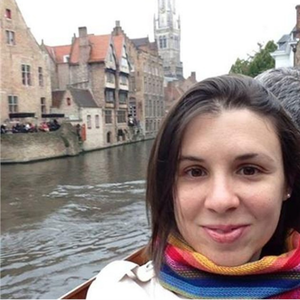
Virginia Foster
Director, 1000 Landscapes for 1 Billion People
Read bio
As a native Floridian, Virginia Foster grew up in a suburban agricultural community adjacent to the Everglades, where she developed a strong passion for conservation and the intersection of agriculture and the rural people managing those resources. Today, Virginia Foster is the Director of 1000 Landscapes for 1 Billion People. With over 20 years of experience in nonprofit management, Virginia has demonstrated leadership in overseeing complex projects, managing and developing programs and staff, and stakeholder engagement. As such, Virginia has played a role in developing and implementing several Rainforest Alliance initiatives, including Forest Allies, Thriving Landscapes, and LandScale. Virginia‘s work extends to serving on the boards of the Rainforest Alliance’s subsidiaries, serving as the RA coalition representative for the Accountability Framework Initiative, and serving on 1000L steering committee.
With a Master’s in Natural Resource Management from Virginia Tech and a Bachelor’s in International Affairs from The George Washington University, Virginia is happy to spend her career focusing on advancing sustainable solutions centering communities. In her free time, Virginia loves reading, writing, birdwatching, participating in local advocacy initiatives, and spending time with her family.
Steering Committee
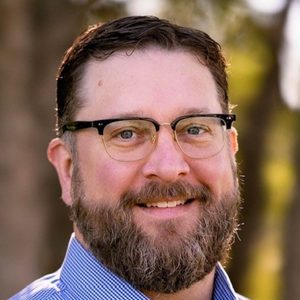
Jason Funk
Senior Director, Forest Strategy at Conservation International
Read bio
Dr. Jason Funk is Senior Director for Forest Strategy at Conservation International and has worked for over 15 years at the intersection of land use and climate change. His role blends research, science-based advocacy, and policy implementation to incentivize land management activities that can help slow climate change, improve rural development, and shape more sustainable landscapes. He works with a global network of land-use experts, policymakers, and stakeholders to develop solutions, especially to finance the protection and sustainable management of forests. Dr. Funk earned his Ph.D. in the Emmett Interdisciplinary Program in Environment and Resources at Stanford University, and he holds B.S. and M.S. degrees in Environmental Science from the Ohio State University. He lives near Chicago, Illinois, with his spouse and two children.
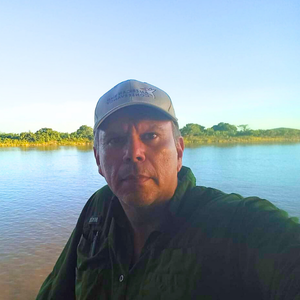
Róger Villalobos
Researcher, Climate Unit, Catie
Read bio
Costa Rican Agronomist, M.Sc. in Management of Natural Tropical Forests. Working in research, technical assistance, postgraduate education, and capacity building in rural development, as well as management, governance, and restoration of forest landscapes in Latin America. Researcher at CATIE’s Climate Action Unit, Coordinator of the Master’s Degree program in Management and Conservation of Tropical Forests and Biodiversity, Chair of Latin America Model Forest Network Board, member of several committees on forest management and restoration in Latin America.
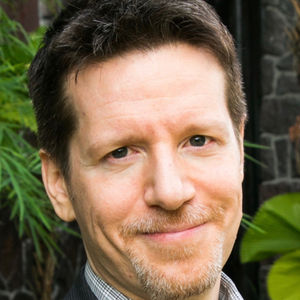
Blake Ratner
Executive Director, Collaborating for Resilience
Read bio
Dr. Blake Ratner is Executive Director, Collaborating for Resilience—a cross-regional, non-profit initiative working to address environmental resource competition and strengthen governance and livelihood resilience in interconnected resource domains and landscapes. He also serves on the Scientific and Technical Advisory Panel of the Global Environment Facility, advising on integrated approaches to achieve global environmental benefits and enhance environmental security. Blake is a former Director General of WorldFish, part of CGIAR, the global partnership for a food secure future. An environmental sociologist, his research addresses social equity, ethics, resource conflict, and dialogue in environmental governance. A passionate advocate of applied research to support development innovation, Blake has led programs in South and Southeast Asia, Central America, and East Africa to strengthen capacity for multi-stakeholder dialogue and collaborative action.

Bhushan Sethi
Executive Director, GALLOP Initiative
Read bio
Bhushan holds a degree in Industrial Electronics and Computer Engineering. With nearly thirty years of experience in technology and global operations management within prominent Fortune 50 companies, he’s a seasoned senior professional in IT and Operations. In 2000, Bhushan led immigration policy reform on Capitol Hill as Vice President and board member of the Immigrants Support Network. Heading congressional communications, he helped reform and pass hi-tech immigration policy, aiding millions of hi-tech workers.
Drawing from his diverse experiences, in 2020, he started the GALLOP Initiative, marking the start of a decade dedicated to Ecosystem Restoration. Bhushan recognizes that a solid foundation is necessary for large-scale policy success. Collaborating with EcoAg and other prestigious institutions like Columbia & Cornell Universities, UNDP, the World Bank, and European governments, Bhushan published the report, Public Policy to Support Landscape and Seascape Partnerships: Meeting Sustainable Development Goals through Collaborative Territorial Action, and brief.
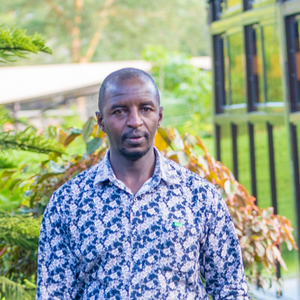
Nelson Muiru
Chief Executive Officer, KENVO
Read bio
Nelson Njihia Muiru is a qualified and ambitious Development Officer, with over 10 years of professional experience in coordinating, leading and supporting project teams. Nelson has
been through the typical growth path of a rural bled Kenyan. Good project management and report writing skills, ensuring the communication of complex messages to a diverse audience, form part of his skills, both by training and by experience. Broad knowledge of international development issues and special interest in community-based projects with a capacity building and livelihood focus. Expertise in stakeholder engagement and biodiversity conservation also forms part of what he is good in. Currently, Nelson is leading a team of experienced staff at KENVO, proudly promoting the Landscape approach model within the Kijabe-Lari Landscape.